
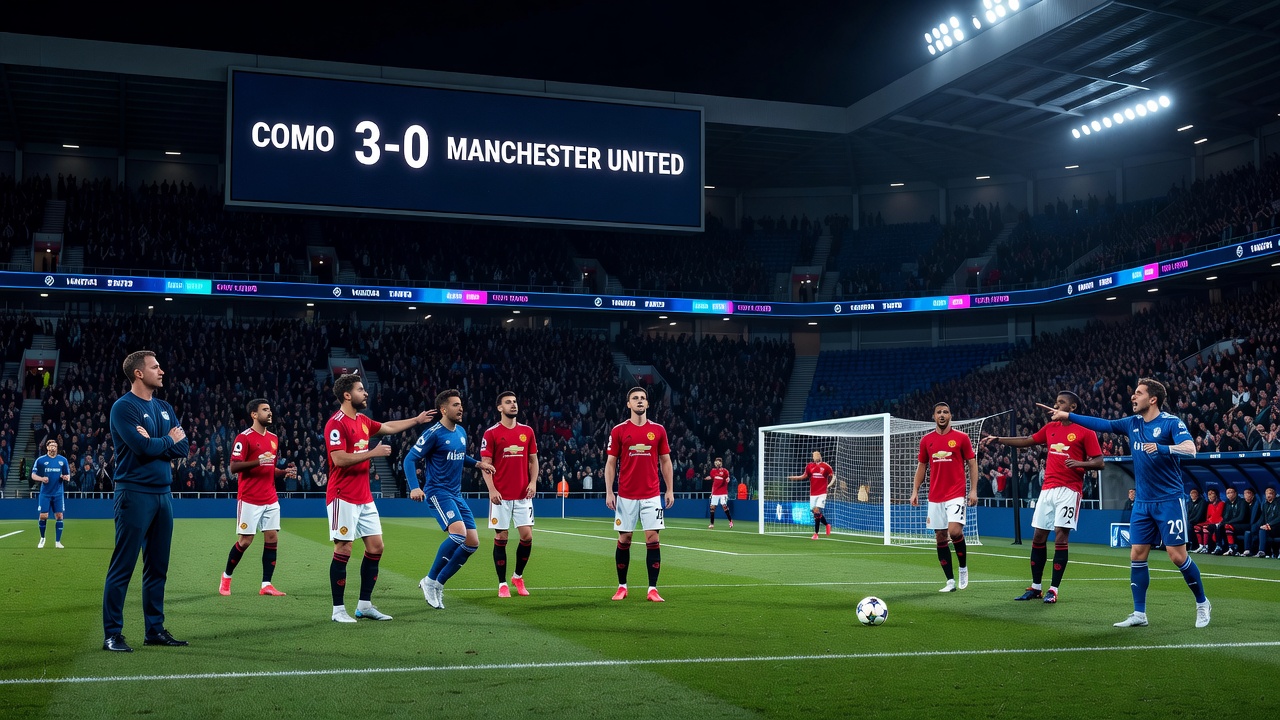
Manchester United conceded inside two minutes for the second consecutive major European fixture, then fell apart against a Como side playing only its third-ever Champions League match. By the 57th minute Cesc Fàbregas's team led 3-0, and a fourth goal from centre-back Jacobo Ramón followed before Joshua Zirkzee's late consolation made no difference to the outcome. The result leaves Michael Carrick with two wins from eleven matches in charge and extends United's winless run in all competitions to seven games.
A Pattern, Not an Accident
Nico Paz curling home inside two minutes echoed Atlético Madrid's 47-second opener eight days earlier - the first time an English club had conceded that quickly in back-to-back major European fixtures. Patterns like this matter beyond the scoreline. They shape how a club is priced and discussed across betting markets, where early markets on time of first goal, half-time result and total goals shift quickly once a side develops a reputation for slow starts. Bookmakers and traders respond to observable tendencies, not reputation; a club that repeatedly ships early goals will see that reflected in shorter odds against it regardless of its history or size.
What Fernandes's Comments Reveal
Bruno Fernandes's public criticism of the "staff's" instruction not to press man-to-man is unusual in its directness. Dressing-room disputes over tactics are common; airing them to broadcasters immediately after a 4-1 defeat is less so. For an audience that follows football alongside the betting and media ecosystem built around it, such comments carry weight: management upheaval, player discontent and poor runs of form are exactly the kind of signals that move manager-sack-next odds and futures markets on relegation or European qualification. Carrick's insistence that effort, not just shape, was the problem suggests a squad still searching for a coherent identity under a manager with limited top-level managerial experience before this role.
Context Around the Numbers
Como's 594 completed passes were the most recorded against United in the Champions League since Barcelona's 725 in April 2019 - a comparison that says as much about United's capacity to press as it does about Como's composure. With nine players unavailable through injury, suspension or illness, Matthijs de Ligt was making his first start in 325 days, a detail that explains some of the vulnerability but does not excuse four conceded goals.
- United: three points from three league-phase games, 13th in the Premier League, eliminated from the Carabao Cup
- Como: six points from three matches, having already beaten RB Leipzig 4-1 before this result
- Next fixtures: United host Bournemouth on Sunday; Como face Sassuolo in Serie A on Saturday
Why This Matters Beyond the Pitch
Results like this ripple into commercial and regulatory territory that rarely makes headlines on their own. Broadcast and sponsorship valuations for clubs the size of Manchester United are partly tied to European performance and global visibility; repeated early exits and winless runs affect negotiating leverage with partners, including gambling operators who sponsor top-flight football across Europe. Advertising standards bodies and gambling regulators in several jurisdictions already scrutinise the proximity between football broadcasts and betting promotions, particularly around in-play markets that react instantly to moments such as a two-minute opening goal. A club under this kind of pressure, with management speculation swirling, becomes a focal point for exactly the sort of volatile, emotionally charged betting activity that consumer-protection advocates flag as higher-risk - underscoring why transparent odds, clear promotional rules and accessible responsible-gambling tools remain relevant even in stories that are, on their surface, purely about football.