
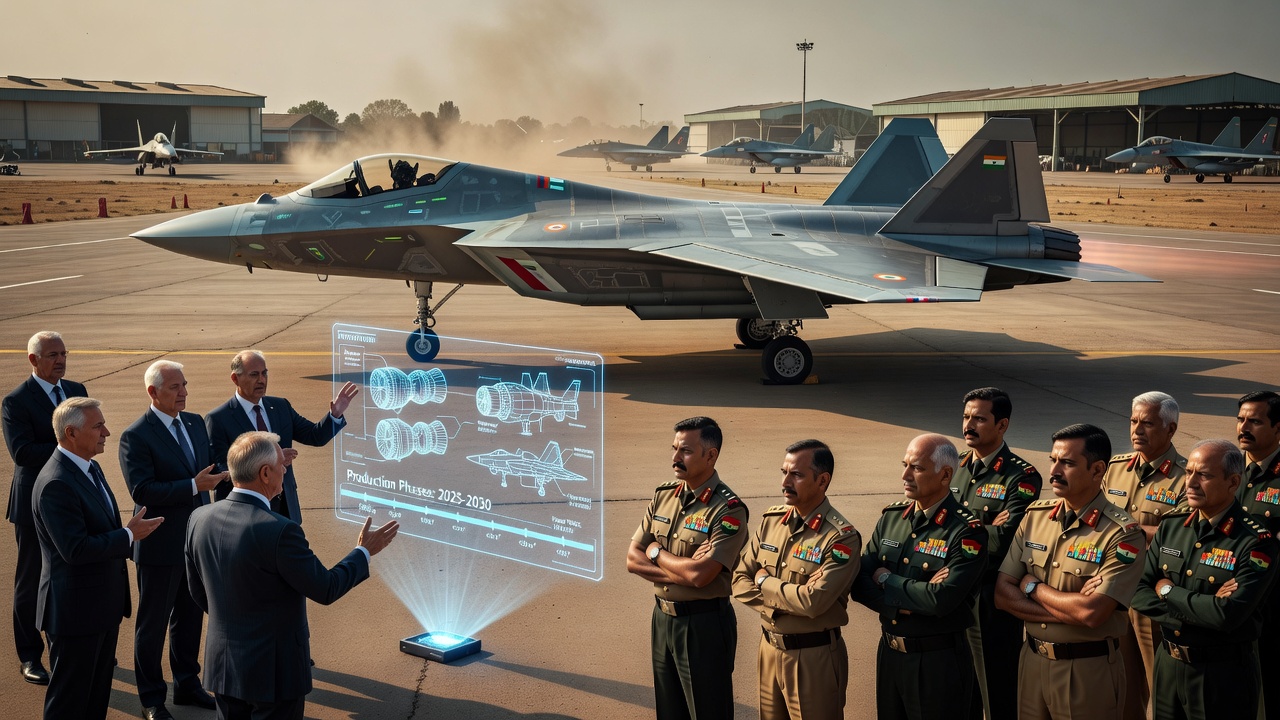
Russia has revived its offer to sell India the Su-57, pairing the fifth-generation fighter with promises of technology transfer and local assembly. The pitch lands at a moment when India is pouring resources into its own stealth fighter programme, the AMCA, and shows no public appetite to revisit a partnership it walked away from years ago.
A Partnership That Already Failed Once
India and Russia once worked together on a joint fifth-generation fighter, the FGFA, built on the Su-57 platform. India exited that programme in 2018. The stated reasons were concerns about stealth performance, engine reliability, and the overall cost of staying in. That exit was not a minor procurement hiccup - it ended years of joint design work and left India without a ready-made path into fifth-generation airpower through Moscow. Rebuilding trust after a collapse of that scale takes more than a renewed sales pitch; it requires India to believe the underlying technical problems have actually been resolved.
Unresolved Questions Around the Aircraft Itself
Since India's withdrawal, the Su-57 has not generated the kind of track record that would quiet earlier doubts. Questions persist about how many aircraft Russia has actually produced and delivered, how the jet has performed in real combat conditions, and whether its stealth characteristics meet the standard expected of a true fifth-generation platform. These are not abstract concerns for a country deciding how to spend defence budgets for the next several decades. An air force evaluating a fighter wants clarity on production scale, supply chain resilience, and demonstrated performance - not promotional assurances. Russia frames the Su-57 as a bridge option, something India could operate while AMCA matures. But a bridge aircraft still has to prove it can fly the distance.
Why Delhi Is Looking Inward Instead
India's reluctance is not simply about skepticism toward Russian hardware. It reflects a broader strategic choice to build indigenous fifth-generation capability through the AMCA programme rather than import it. That path is slower and costlier upfront, but it gives India control over technology, maintenance, and future upgrades - control that depending on a foreign supplier, especially one facing its own production and sanctions pressures, cannot guarantee. There is also a geopolitical dimension: India has been diversifying its defence partnerships for years, working with France, the United States, and domestic manufacturers, reducing the degree to which any single supplier relationship can shape its military planning.
What the Renewed Offer Signals
Russia's continued pitch says as much about its own position as it does about India's needs. Losing a major partner like India from the Su-57 ecosystem affects export prospects and production economics. Offering technology cooperation and local manufacturing is a familiar strategy to make a stalled deal attractive again, but it does not address the core issues that caused India to leave in the first place - stealth performance, engine maturity, and transparent production numbers. Until those are credibly addressed, the offer is likely to remain just that: an offer, repeated, and set aside.