
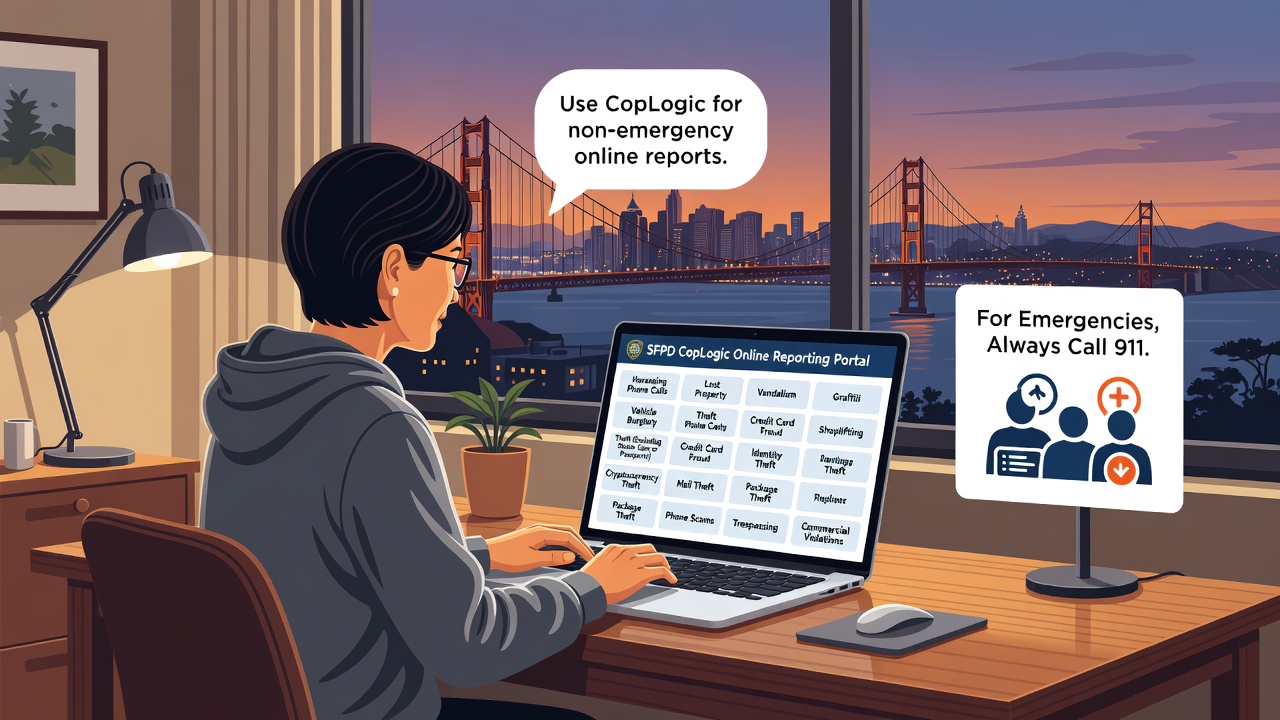
Choosing the correct channel to report a crime in San Francisco can determine how quickly help arrives and whether a case moves forward at all. The San Francisco Police Department has laid out a structured system that separates true emergencies from matters better handled through non-emergency lines or an online portal, a distinction that affects response times, officer deployment, and the accuracy of the city's crime data.
When 9-1-1 Is the Right Choice
Dialing 9-1-1 is reserved for situations involving immediate danger: an active threat to life or safety, a crime involving a weapon, an offense still in progress, or cases where a suspect's location is known. Using the emergency line for anything less urgent diverts dispatchers and patrol resources from situations where minutes matter. For everything else, SFPD directs residents to its non-emergency number, 1-415-553-0123, which connects callers to an officer without triggering an emergency response.
What Can and Cannot Be Filed Online
The department's online reporting system, powered by CopLogic, allows residents to file reports for a defined set of lower-risk incidents without visiting a station or waiting for an officer. This includes harassing phone calls, lost property, vandalism, graffiti, vehicle burglary and tampering, most theft (excluding burglary or stolen passports, firearms, license plates, cars, or electric vehicles), credit card fraud, shoplifting, identity and cryptocurrency theft, mail and package theft, phone and electronic scams, trespassing, and specific commercial violations involving alcohol or tobacco permits.
- Residential burglaries and robberies require in-person or non-emergency reporting.
- Traffic collisions, hit-and-runs, and stolen vehicles or license plates cannot be filed online.
- Lost or stolen foreign passports and stolen e-bikes with serial numbers must be reported directly to a station or via the non-emergency line.
Reports that fall outside the eligible categories are redirected rather than processed, which means residents attempting to file ineligible claims online will face delays rather than faster resolution. Anyone without internet access, or who prefers assistance in another language, can call 3-1-1, or 1-415-701-2311 from outside the city, where support is available continuously and language assistance covers more than 175 languages.
Jurisdiction Matters
SFPD authority stops at the boundaries of city and county property. Incidents occurring on BART platforms, freeways, the Golden Gate Bridge, the Presidio, or university campuses such as SF State, UCSF, USF, and City College fall under separate police agencies with their own contact lines. Reporting to the wrong agency wastes time that could otherwise go toward an actual investigation, which is why the department publishes a direct list of transit, highway, and campus police contacts alongside its own.
The Legal Weight of a False Report
Filing a report online does not reduce its legal seriousness. Every submission is reviewed by an officer before it becomes official, and California Penal Code Section 148.5 makes clear that knowingly filing a false report - including false identities, invented incidents, fabricated details, or inflated values of stolen or damaged property - is a misdemeanor carrying potential jail time and fines. The department has stated it pursues these cases through the local District Attorney's office, treating "joke" or "hoax" submissions through the online system the same as any other false report. Supplemental reports exist specifically to add legitimate detail, such as a recovered serial number, to an existing case rather than to create confusion in the record.